Buy werkvertrag.eu ?
We are moving the project
werkvertrag.eu .
Are you interested in purchasing the domain
werkvertrag.eu ?
domain@kv-gmbh.de · 0541-91531010
Buy werkvertrag.eu ?
What are examples of reaction formation?
Some examples of reaction formation include a person who is secretly attracted to someone but openly expresses dislike or hostility towards them, a politician who publicly denounces a behavior they privately engage in, and a parent who outwardly expresses love and concern for their child but inwardly feels resentment and hostility. These examples demonstrate how individuals may exhibit behaviors that are the opposite of their true feelings in order to cope with or conceal their true emotions. **
What are the reaction equations for ester formation?
The general reaction equation for ester formation involves the reaction between a carboxylic acid and an alcohol in the presence of an acid catalyst. The reaction proceeds through a nucleophilic acyl substitution mechanism, where the -OH group of the carboxylic acid is replaced by the -OR group of the alcohol, resulting in the formation of an ester and water. The reaction can be represented by the following general equation: Carboxylic acid + Alcohol → Ester + Water This reaction is reversible, and the equilibrium can be shifted towards the formation of ester by removing the water formed during the reaction. **

Similar search terms for Reaction formation
Top-Angebote
Products related to Reaction formation:




-
Is there a salt formation reaction with aluminum bromide?
Yes, there is a salt formation reaction that can occur with aluminum bromide. When aluminum bromide reacts with certain compounds, such as sodium chloride, a salt formation reaction can take place. In this reaction, aluminum bromide can donate its aluminum ion to combine with the chloride ion from sodium chloride, resulting in the formation of aluminum chloride and sodium bromide. This type of reaction is common in chemistry and is known as a salt metathesis reaction. **
-
What is the difference between standard enthalpy of formation, enthalpy of formation, and reaction enthalpy?
The standard enthalpy of formation is the enthalpy change that occurs when one mole of a compound is formed from its elements in their standard states. Enthalpy of formation is the enthalpy change that occurs when one mole of a compound is formed from its elements in their standard states, but it can be under non-standard conditions. Reaction enthalpy is the enthalpy change that occurs in a chemical reaction, which can be exothermic (heat is released) or endothermic (heat is absorbed). **
-
What is the salt formation reaction between aluminum and bromine?
The salt formation reaction between aluminum and bromine results in the formation of aluminum bromide. This reaction involves the transfer of electrons from aluminum to bromine, leading to the formation of Al3+ cations and Br- anions. The balanced chemical equation for this reaction is 2Al + 3Br2 → 2AlBr3. Aluminum bromide is a white, crystalline solid that is highly soluble in water and is commonly used in organic synthesis reactions. **
-
Why is the formation of carbon monoxide a redox reaction?
The formation of carbon monoxide (CO) is a redox reaction because it involves the transfer of electrons between carbon and oxygen. In this reaction, carbon undergoes oxidation by losing electrons to oxygen, while oxygen undergoes reduction by gaining electrons from carbon. This transfer of electrons results in the formation of CO, making it a redox reaction. **


What is the reaction equation for the formation of rust?
The reaction equation for the formation of rust is: 4Fe + 3O2 → 2Fe2O3 This equation represents the reaction of iron (Fe) with oxygen (O2) to form iron oxide (Fe2O3), which is the chemical compound known as rust. In this reaction, iron atoms react with oxygen molecules to produce iron oxide, which is the red-brown substance commonly known as rust. **
What is the reaction equation for the formation of a tripeptide?
The reaction equation for the formation of a tripeptide involves the condensation of three amino acids. This process involves the removal of two molecules of water, one from each amino acid, to form peptide bonds between the amino acids. The general equation for the formation of a tripeptide can be represented as: Amino Acid 1 -NH2 + H - C=O- Amino Acid 2 → Amino Acid 1 -NH- C=O- + H-Amino Acid 2 -NH2 → Amino Acid 1 -NH- C=O- Amino Acid 2 -NH- C=O- Amino Acid 3 + 2H2O. **
Top-Angebote
Products related to Reaction formation:
-
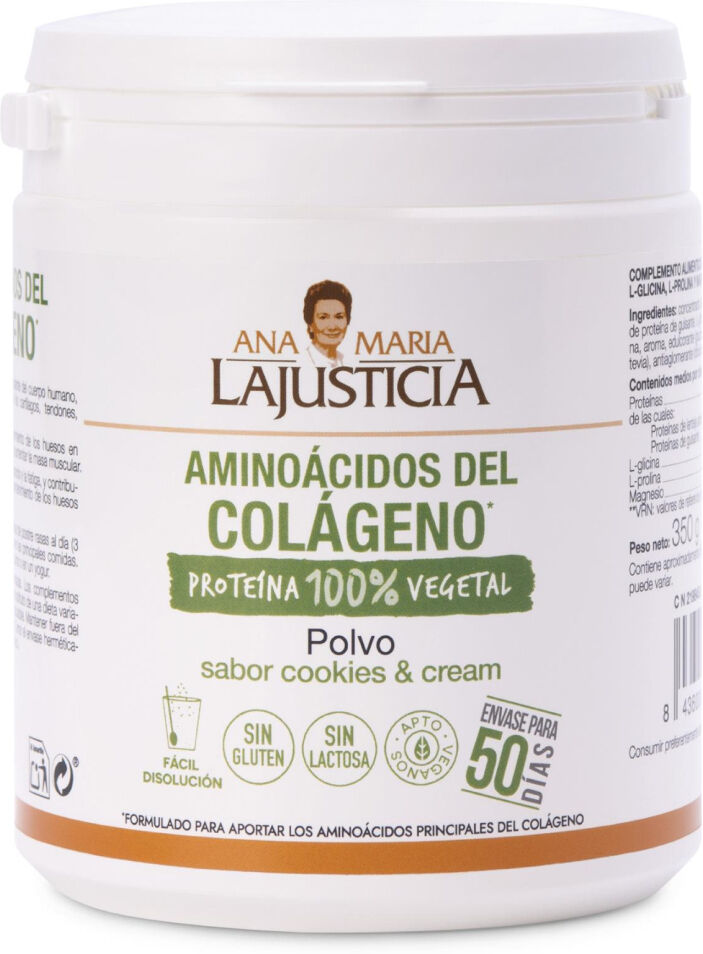
Ana María Lajusticia Amino Acids Collagen Formation 350g Cookies &Nutrition and Supplements Collagens and Cartilage Ana María Lajusticia Amino Acids Collagen Formation 350g Cookies & What is Amino Acids Collagen Formation 350g Cookies & Cream? Amino Acids Collagen Formation 350g Cookies & Cream is a nutritional supplement formulated to support the body's natural collagen synthesis. Its combination of essential and specific amino acids contributes to the maintenance of healthy bones, joints, skin, hair, and nails. This product stands out for its delicious Cookies & Cream flavor, allowing you to enjoy a pleasant experience while supporting your body's structural health. Thanks to its high bioavailability, it is ideal for those looking to boost collagen production in a practical and effective way. Benefits Amino Acids Collagen Formation 350g Cookies & Cream offers multiple key benefits for overall well-being: • Promotes the natural formation of collagen , essential for maintaining strong and flexible connective tissues. • It contributes to joint health , helping to reduce stiffness and improve mobility. • Improves skin elasticity and firmness , promoting a younger and healthier appearance. • Strengthens nails and hair thanks to its supply of structural amino acids. • Supports muscle recovery in active people or athletes. • Pleasant Cookies & Cream flavor that makes it easy to consume daily. Who is it for? This supplement is recommended for: • People who want to strengthen joints, bones and connective tissues. • Those seeking to improve the firmness, elasticity and overall appearance of the skin. • Athletes or physically active people who need to support muscle recovery. • Men and women over 25 years of age, a stage in which the natural production of collagen decreases. • People with brittle nails or weakened hair who require structural reinforcement. • Users looking for an effective supplement with a pleasant taste and easy to consume. How do I apply it? For best results with Amino Acids Collagen Formation 350g Cookies & Cream, follow these instructions: • Mix the manufacturer's recommended dose in a glass of water, plant-based milk, or your preferred beverage. • Stir until the contents are completely dissolved. • Consume it once a day, preferably in the morning or after physical activity. • You can add it to smoothies, yogurts, or fitness recipes to complement your daily routine. • Maintain a consistent intake to promote continuous collagen production. Product use Daily use of Amino Acids Collagen Formation 350g Cookies & Cream contributes to strengthening the skin, joints, and connective tissue. Its formula, rich in essential amino acids, supports the body's internal structure, helping to maintain skin elasticity, improve joint mobility, and aid muscle recovery. It's an ideal supplement for those who want to improve their overall well-being and preserve the body's structural health in a practical and delicious way. Buy Amino Acids Collagen Formation 350g Cookies & Cream Buying Amino Acids Collagen Formation 350g...18,45 £*Shipping: 3,99 £Secure redirect to the provider
-
Multisell Products Hub Smart Bluetooth Boxing Trainer, Improve Reaction Speed & Coordination Smart Bluetooth Boxing Trainer, Improve Reaction Speed & CoordinationThe Smart Bluetooth Music Boxing Trainer is a wallmounted fitness device designed to enhance your reaction speed and coordination through interactive, musicbased boxing workouts. Whether you're a beginner or a professional, this trainer helps you...136,99 $*Shipping: 0,00 $Secure redirect to the provider
-
What are examples of reaction formation?
Some examples of reaction formation include a person who is secretly attracted to someone but openly expresses dislike or hostility towards them, a politician who publicly denounces a behavior they privately engage in, and a parent who outwardly expresses love and concern for their child but inwardly feels resentment and hostility. These examples demonstrate how individuals may exhibit behaviors that are the opposite of their true feelings in order to cope with or conceal their true emotions. **
-
What are the reaction equations for ester formation?
The general reaction equation for ester formation involves the reaction between a carboxylic acid and an alcohol in the presence of an acid catalyst. The reaction proceeds through a nucleophilic acyl substitution mechanism, where the -OH group of the carboxylic acid is replaced by the -OR group of the alcohol, resulting in the formation of an ester and water. The reaction can be represented by the following general equation: Carboxylic acid + Alcohol → Ester + Water This reaction is reversible, and the equilibrium can be shifted towards the formation of ester by removing the water formed during the reaction. **
-
Is there a salt formation reaction with aluminum bromide?
Yes, there is a salt formation reaction that can occur with aluminum bromide. When aluminum bromide reacts with certain compounds, such as sodium chloride, a salt formation reaction can take place. In this reaction, aluminum bromide can donate its aluminum ion to combine with the chloride ion from sodium chloride, resulting in the formation of aluminum chloride and sodium bromide. This type of reaction is common in chemistry and is known as a salt metathesis reaction. **
-
What is the difference between standard enthalpy of formation, enthalpy of formation, and reaction enthalpy?
The standard enthalpy of formation is the enthalpy change that occurs when one mole of a compound is formed from its elements in their standard states. Enthalpy of formation is the enthalpy change that occurs when one mole of a compound is formed from its elements in their standard states, but it can be under non-standard conditions. Reaction enthalpy is the enthalpy change that occurs in a chemical reaction, which can be exothermic (heat is released) or endothermic (heat is absorbed). **
Similar search terms for Reaction formation
-
What is the salt formation reaction between aluminum and bromine?
The salt formation reaction between aluminum and bromine results in the formation of aluminum bromide. This reaction involves the transfer of electrons from aluminum to bromine, leading to the formation of Al3+ cations and Br- anions. The balanced chemical equation for this reaction is 2Al + 3Br2 → 2AlBr3. Aluminum bromide is a white, crystalline solid that is highly soluble in water and is commonly used in organic synthesis reactions. **
-
Why is the formation of carbon monoxide a redox reaction?
The formation of carbon monoxide (CO) is a redox reaction because it involves the transfer of electrons between carbon and oxygen. In this reaction, carbon undergoes oxidation by losing electrons to oxygen, while oxygen undergoes reduction by gaining electrons from carbon. This transfer of electrons results in the formation of CO, making it a redox reaction. **
-
What is the reaction equation for the formation of rust?
The reaction equation for the formation of rust is: 4Fe + 3O2 → 2Fe2O3 This equation represents the reaction of iron (Fe) with oxygen (O2) to form iron oxide (Fe2O3), which is the chemical compound known as rust. In this reaction, iron atoms react with oxygen molecules to produce iron oxide, which is the red-brown substance commonly known as rust. **
-
What is the reaction equation for the formation of a tripeptide?
The reaction equation for the formation of a tripeptide involves the condensation of three amino acids. This process involves the removal of two molecules of water, one from each amino acid, to form peptide bonds between the amino acids. The general equation for the formation of a tripeptide can be represented as: Amino Acid 1 -NH2 + H - C=O- Amino Acid 2 → Amino Acid 1 -NH- C=O- + H-Amino Acid 2 -NH2 → Amino Acid 1 -NH- C=O- Amino Acid 2 -NH- C=O- Amino Acid 3 + 2H2O. **
* All prices are inclusive of VAT and, if applicable, plus shipping costs. The offer information is based on the details provided by the respective shop and is updated through automated processes. Real-time updates do not occur, so deviations can occur in individual cases. ** Note: Parts of this content were created by AI.